From a free period to a research firm.
This page is a little personal. It’s the longer version of how I got here, told plainly. About eight minutes to read.
The classroom version of me.
I have liked numbers for as long as I can remember. In 2014, I won a trophy at an arithmetic competition. That photo still sits in a frame.
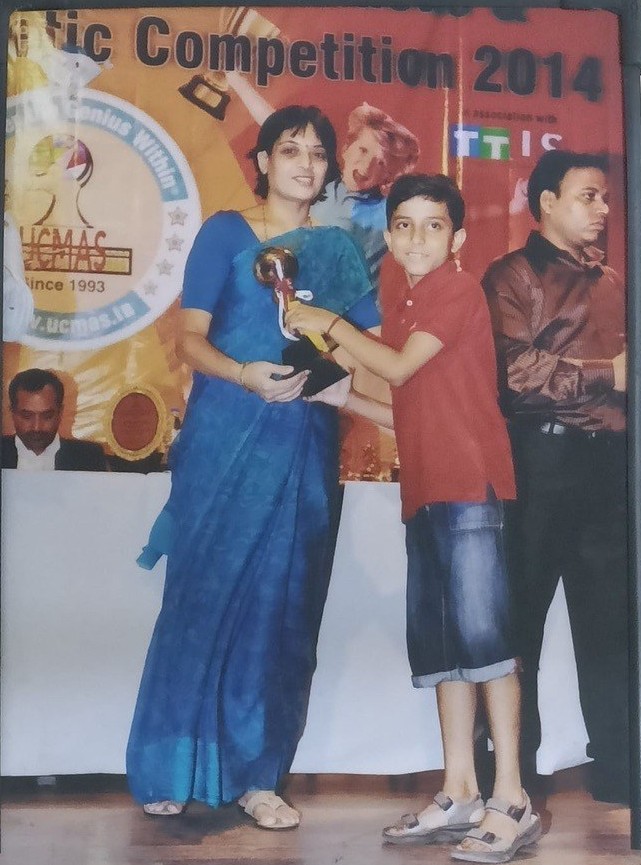
Then school turned into a system I learned to beat. I cleared my exams, and from the outside everything looked fine: good report cards, pleased teachers, relaxed parents.
The truth was less impressive. Most of it was rote learning. I studied at the last minute, wrote the paper and moved on. I wasn’t learning. I was just getting through.
Ratta maarna aur seekhna, dono alag cheezein hain.
At the time, it didn’t feel like a problem. Everyone did it. I only noticed the difference when something finally made me curious.
A free period in 2019.
Class 10. A teacher was absent, so we had a free period. I spent it explaining to my friends what a stock is: a small piece of a company, why its price moves, and why people put their money into it.
One of them recorded it. I didn’t even know what CFA stood for back then.
“I was never bad at learning. I was bad at learning things I did not care about.”
That day, I realised that when a subject genuinely interests me, studying stops feeling like effort. Hours pass without my noticing. For me, learning has always been less about the classroom and more about curiosity.
Engineering, and markets.
Then I did what most families expect. I prepared for JEE and went on to study Electronics and Communication Engineering at VIT Vellore.
In college, most people were practising coding problems for placements. I was reading businesses: annual reports, earnings calls, bond yields. I kept building simple frameworks to understand how a company really works.
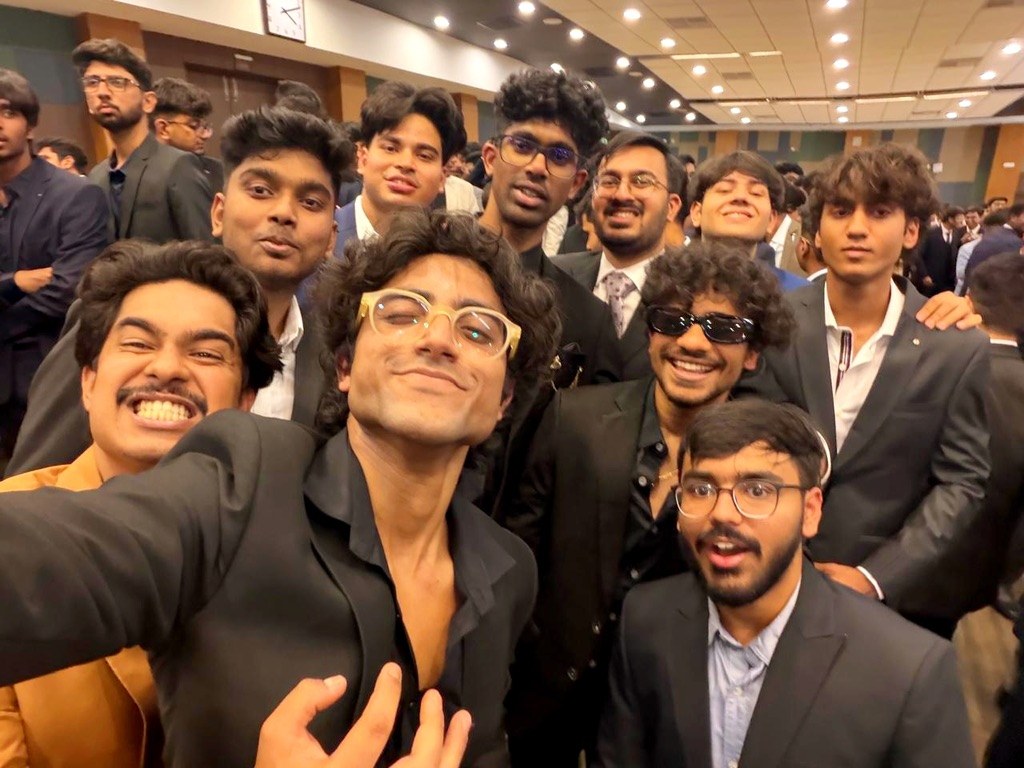
Two people shaped that path, and they deserve the credit. Ishmohit Arora sir taught me that research means going deep instead of stopping at the surface. Parth Verma gave me a line I still follow: gather as much information as you can.
Most of my classmates chose whichever job paid the most. There’s nothing wrong with that. My answer was simpler: do what I love. For me, that meant businesses, markets, money and how the world moves.
Safe choice aur right choice hamesha same nahi hoti.
The question every recruiter asks: CFA?
It comes up in almost every interview. I respect the CFA charter, and everyone who earns it.
But I’m not naturally an exam person. I learn best through the work itself: researching, talking to people, watching businesses closely, making mistakes and getting better.
I did take the exam that mattered. A research analyst in India needs the NISM Series XV certification, so I cleared it. Beyond that, my answer is simple.
People will judge the work, not the letters after my name.
Investace Capital.
At 22, I co-founded Investace Capital, a SEBI-registered research firm in Mumbai. We research listed Indian businesses, and you can see our work at investacecapital.com.
It’s where I learn by doing: how businesses are built, how they scale, where they break and where value actually comes from.
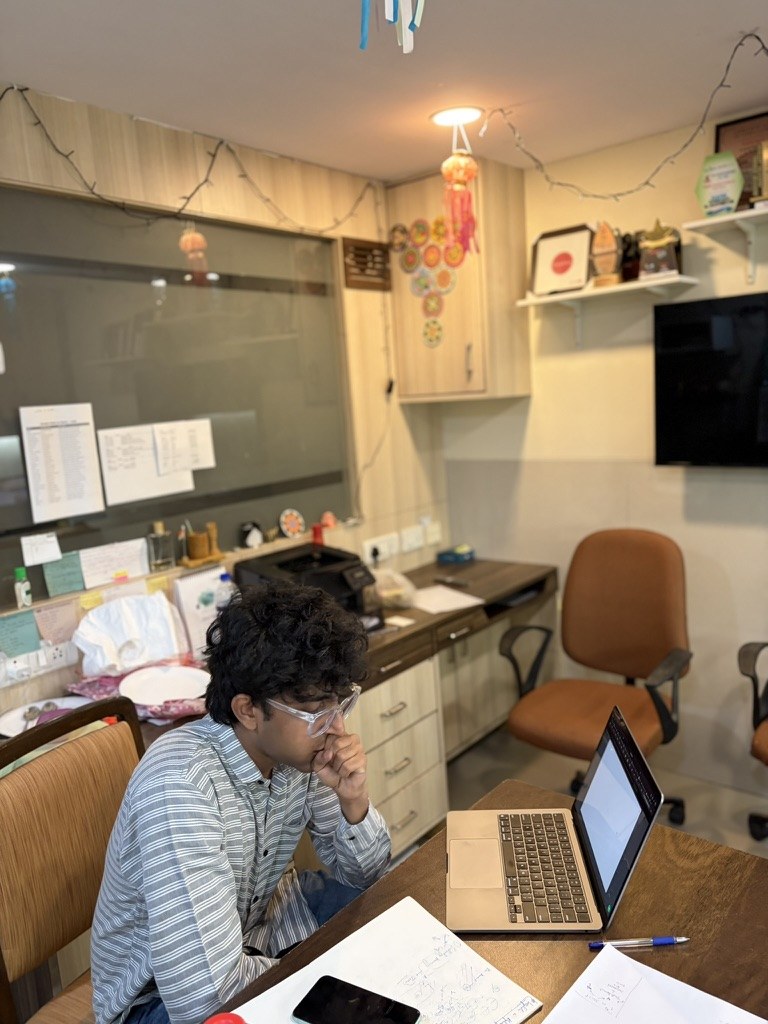
I’m building in public. Not because I have it all figured out, but because I want my thinking to compound in public.
How I think.
I think of it like a jigsaw puzzle. One piece on its own shows almost nothing. Put enough of them together and a picture starts to appear.
Here is a made-up example. A small town gets a new highway. In the same month, a company says it will open a factory nearby, the local bank starts advertising home loans, and land at the edge of town quietly gets more expensive. Each of these is a small story most people skip. Put together, they say the town is about to grow, long before anyone writes that headline.
That is the whole habit: keep collecting the small pieces, notice when they start to fit, and form a view before the news says it out loud.
Questions excite me more than answers. What is changing that nobody is talking about yet? Who gains if it carries on, and who quietly loses?
Next to every view, I write down what would prove me wrong.
Main certainty sell nahi kar raha. Main better thinking build kar raha hoon.
“I don’t want to sound certain. I want to become less wrong.”
A little personal.
I’m an introvert. I don’t talk much about my personal life, and small talk, parties for the sake of parties and endless gossip drain me.
I do enjoy meeting people. The conversations I value most are the ones where I learn something real: a business, a career, a market, a piece of history, or how someone built something. When someone is teaching me, I listen carefully.
And when a topic genuinely interests me, I can talk for hours. One example leads to the next, I go deep into the details, and sometimes I find it hard to stop. Business, economics, markets, geopolitics, history: yeh cheezein mujhe genuinely excite karti hain.
My past relationships taught me something about myself: I overcommit. When I’m emotionally invested, I make the other person the centre of my attention and lose my focus. That’s my pattern, not anyone else’s fault.
So for now, I’ve consciously stepped back from dating. Relationships aren’t bad, and I don’t have all the answers. I may be wrong about this too. But right now, I want to protect my focus, build my work and become more emotionally steady.
“Attention is expensive. Right now, I’d rather invest mine in becoming someone I respect.”
I’m also not comfortable on camera. People tell me to record more, that I look fine. Maybe. But I find it easier to put my thinking on the page than to put myself in front of a camera. That’s partly why the face on my home page is made of small pieces.
What I’ve built.
In a small research firm, you end up doing everything yourself: reading, writing, compliance, the website, client onboarding. So whenever a task kept repeating, I built a system for it, mostly with AI.
The biggest is Investace Brain. Think of it as a research associate who never sleeps. It reads exchange filings, news, earnings-call transcripts and dozens of independent newsletters. It separates what matters from what doesn’t, keeps the source for every claim, and runs a “contrary evidence” debate on every thesis: what would prove it wrong?
In its first month, it read more than 18,000 documents, kept more than 38,000 pieces of evidence and tracked 83 companies. One rule never changes: Brain only drafts. A person makes the decision.
- The AlphaLeap platform: KYC, payments, a basket sized to your own money, one-click orders you place in your own broker account, and a rebalance check every morning. It’s live.
- A content studio: drafts that start from evidence, a screen against SEBI’s advertising code, and nothing published without a person’s approval.
- A compliance desk: an offline library of 144 SEBI documents, and an assistant that answers with the exact clause.
- Films written as code: Investace’s brand films are written in HTML and rendered to video.
Not everything worked, and that’s worth saying. I built dashboards for two short-term products, and within weeks we shut both down to focus on long-term research. It was the right decision. I learned to build fast, and to let go of what I’d built.
Behind all of it is one idea: let AI read, sort and draft. Thinking and signing off is our job.
What’s next.
Honestly, Investace Brain still runs on my Mac, and that’s the problem. A laptop isn’t a 24-hour research desk. I’m moving it to a server so I can open it to more people: students, analysts and investors who want to read the market the way a research desk does. It’s coming soon.
A free Portfolio Scan is coming too: four pages that show what you own, where your exposure is concentrated and which questions you should be asking. It’s in testing now.
And I’ll keep writing. Before the Headline arrives every two weeks: one question, the numbers in plain language, the second-order effect most people miss, and what would prove me wrong. No tips. No noise.
If you’ve read this far, we probably think alike.
Join the newsletter. I’ll only write when I have something worth saying. Main figure out kar raha hoon. In public.